
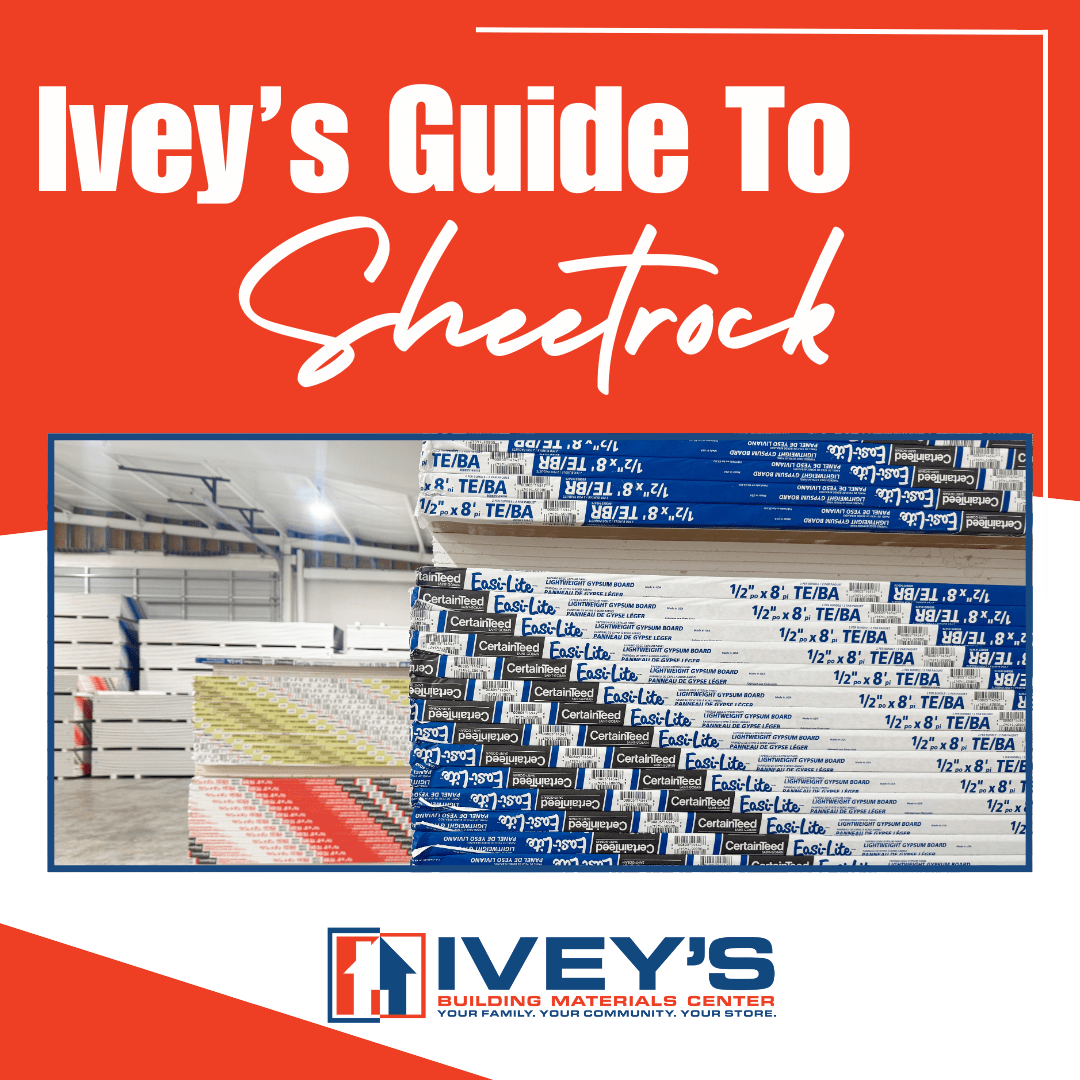
Sheetrock, drywall, gypsum board – whatever you call it, it’s the unsung hero of interior walls and ceilings. It provides a smooth surface, fire resistance, and a foundation for your paint or wallpaper. But with a seemingly endless array of options, choosing the right type for your specific project can feel overwhelming. Don’t worry – Ivey’s has your back! This guide will break down the key types of sheetrock and help you make an informed decision to get a flawless finish and the performance you need.
The Foundation: Understanding Standard Drywall
At its core, standard drywall is a panel made of gypsum plaster pressed between two thick sheets of paper. It’s a versatile and cost-effective material suitable for most general wall and ceiling applications in dry, interior spaces. Available in various thicknesses, standard drywall offers good sound dampening and a smooth surface for finishing. Two of our most popular sizes are the 4×8 panels and the 4×12 panels. In addition to our standard sheetrock options, there are also excellent speciality items available for special projects.
When Fire Safety is Paramount: Type X (Fire-Rated) Drywall
Safety should always be a top priority, and when it comes to fire resistance Type X drywall (often referred to as fire rock) is your go-to solution. This specialized drywall contains non-combustible fibers that slow down the spread of fire, providing crucial extra time for escape in an emergency.
Key applications for Type X drywall include:
- Garages: Building codes often mandate fire-rated drywall on walls and ceilings separating the garage from the living areas. This helps prevent a garage fire from quickly spreading into your home.
- Party Walls in Multi-Family Dwellings: Ensuring fire separation between units is critical for safety and building regulations.
- Specific Areas Mandated by Building Codes: Depending on your local codes and the type of construction, fire-rated drywall might be required in other areas as well.
- Around Appliances that Generate Heat: Consider using Type X around fireplaces or certain types of ovens for added safety.
Understanding Fire Codes: Always consult your local building codes to determine the specific fire-rating requirements for your project. Type X drywall typically offers a one-hour fire rating, but thicker versions or multiple layers can achieve higher ratings.
Battling Moisture: The Importance of Mold-Resistant Drywall (Mold Rock)
In areas prone to moisture, standard drywall can become a breeding ground for mold and mildew. This is where mold-resistant drywall, often called mold rock, comes into play. This type of drywall features a non-paper facing (often fiberglass) and a moisture-resistant core that inhibits mold growth.
Ideal applications for Mold Rock include:
- Bathrooms: Showers, tubs, and sinks create humid environments.
- Kitchens: Cooking activities can generate significant moisture.
- Laundry Rooms: Washing machines and dryers release moisture into the air.
- Basements: Especially those prone to dampness or leaks.
- Garages (in some cases): Depending on humidity levels and potential for water intrusion.
While mold rock isn’t waterproof, it provides a significant level of protection against moisture damage and the associated health risks of mold. For areas with direct water exposure (like inside a shower enclosure), cement backer board is the recommended choice.
Specialty Thicknesses: ¼” and ⅜” Drywall
While ½” and ⅝” are the most common thicknesses, you might encounter thinner options like ¼” and ⅜” drywall. These are typically used for specific applications:
- ¼” Drywall: This ultra-flexible drywall is ideal for creating curved walls, archways, or repairing existing plaster walls. It can bend more easily without cracking.
- ⅜” Drywall: Often used in mobile homes due to its lighter weight and flexibility, which accommodates the stresses of transportation. It can also be used for resurfacing existing walls.
Keep in mind that thinner drywall offers less sound dampening and impact resistance compared to thicker options.
The DIY Arsenal: Essential Repair Items
Even with careful installation, drywall can sometimes suffer damage. Having a few key repair items on hand will allow you to tackle small issues quickly:
- Small Hacksaw or Utility Knife: For scoring and snapping drywall to size.
- Drywall Repair Panels: Pre-cut pieces of drywall in various sizes, perfect for patching holes.
- Joint Compound (Mud): Used to fill screw holes, seams, and imperfections. Choose between all-purpose, lightweight, or setting-type compounds depending on your needs and drying time preferences.
- Drywall Tape: Paper or fiberglass mesh tape used to reinforce seams and prevent cracking.
- Drywall Screws: Specifically designed screws that won’t tear the paper facing.
Making the Right Choice: Let’s Wrap It Up
Choosing the correct sheetrock is crucial for the longevity, safety, and overall quality of your project. Here’s a quick recap:
- Standard Drywall: General interior walls and ceilings in dry areas.
- Type X (Fire Rock): Garages, party walls, and areas requiring fire resistance according to building codes.
- Mold Rock: Bathrooms, kitchens, laundry rooms, basements, and other moisture-prone areas.
- ¼” Drywall: Curved surfaces and plaster repair.
- ⅜” Drywall: Mobile homes and resurfacing.
If you have questions, ask an Ivey’s team member! We are always available to guide our customers to the perfect product for their project.

